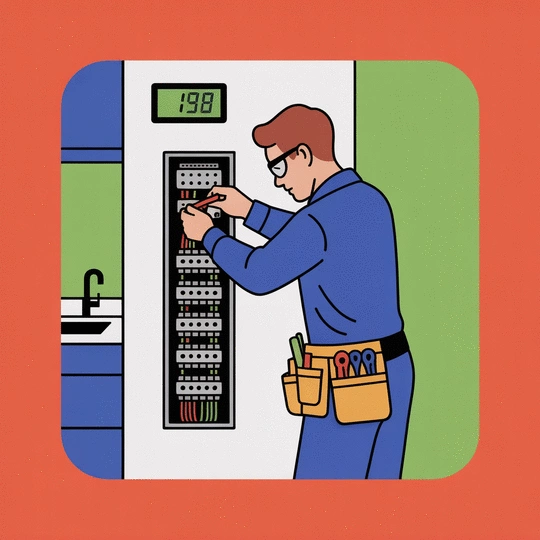
Electrical Safety and Grid Disconnection During Major Renovations

Posted on: 2026-03-03
By: Evelyn Grant
Electrocution is the second leading cause of traumatic fatalities in the construction industry in New South Wales, and across Australia, around 660 workers are hospitalised for electricity-related injuries every single year. Yet one of the most preventable causes of these incidents continues to happen on demolition and renovation sites: starting work before the electrical supply has been fully and permanently removed from the grid.
Whether you are tearing down an old home in Melbourne or gutting a commercial building for a full fitout, grid disconnection is not a formality. It is a legal requirement and a life-saving step that must happen before any physical work begins.
This guide walks through why electrical abolishment matters, how the process works in Victoria, what each party is responsible for, and what happens when this critical step gets skipped.
Why Turning Off the Power Is Not Enough
Many property owners make a dangerous assumption: that switching off the main power at the switchboard is sufficient to make a site safe for demolition. This is incorrect, and the misunderstanding has cost lives.
When you turn off power at the breaker, electricity still flows through the service line connecting your property to the street or network. This segment of live cable runs from the overhead power pole or underground conduit directly to your meter box.
It remains energised even when all internal circuits are switched off. A demolition crew that cuts through walls, removes meter boxes, or breaks apart structural elements can encounter this live section without any warning.
Abolishment is an entirely different process. It involves the physical removal of the electricity meter, the disconnection of the service cable, and formal certification by the energy distributor that no live infrastructure remains connected to the property. Only at this point is a site truly safe for demolition work.
The distinction matters enormously under Australian law. According to SafeWork SA, work carried out on or near energised electrical installations is classified as high-risk construction work under the Work Health and Safety Regulations 2012. Builders and demolition contractors who commence work before abolishment is confirmed face serious enforcement action, including prosecution and significant financial penalties.
The Electrical Abolishment Process in Victoria
In Victoria, the abolishment process involves several parties and typically takes a minimum of 20 business days from when you submit your application. Understanding each stage helps property owners avoid costly delays to their project timeline.
Step 1: Contact your electricity retailer. The process begins with the property owner or their representative contacting the electricity retailer — the company that sends the electricity bills. You will need the property's 11-digit National Meter Identifier (NMI), which appears on every electricity bill. The retailer then lodges an Abolishment Service Order with the relevant network distributor. In Melbourne, this is typically CitiPower or Powercor, depending on your suburb.
Step 2: Network distributor assessment. The distributor assesses the site and schedules a date for the physical removal of the meter and service infrastructure. This step involves removing the overhead or underground service line, the electricity meter, and any other network-owned equipment from the property.
Step 3: Certificate of Electrical Safety issued. Once the work is complete, a Certificate of Electrical Safety (CoES) is issued by the licensed electrician who carried out the disconnection work. This certificate confirms that all live electrical infrastructure has been safely removed and that no hazards remain.
Step 4: Demolition can legally proceed. Obtaining an official certificate of electrical abolishment must be completed before a demolition contractor Melbourne can legally or safely begin tearing down the property.
Before the crew starts work, they are still required to visually confirm that the electricity meter has been physically removed and check that the distributor has placed a yellow warning sticker in the meter box. This sticker confirms the grid supply has been disconnected. Never accept verbal confirmation alone; always verify through physical inspection of the meter box.
Temporary vs. Permanent Disconnection: Knowing the Difference
Not every renovation requires full abolishment. Depending on the scope of your project, you may need either a temporary disconnection or a permanent abolishment, and choosing the wrong type can cause expensive delays.
Temporary disconnection is used when power needs to be cut for a short period to allow electrical or building work, after which it will be reconnected. This is common for partial renovations, re-roofing, or adding extensions where the building remains structurally intact. The supply line is isolated at the network attachment point but remains in place, and reconnection can be arranged once works are complete.
Permanent abolishment is required when the structure is being fully or substantially demolished, when the property footprint will change significantly, or when a new dwelling or commercial building will replace the existing one. Once abolished, the property has no electricity connection at all, and a brand-new connection application must be submitted for the rebuilt structure.
Choosing temporary disconnection for a site that actually requires abolishment is not just a minor administrative error, it leaves live infrastructure in place during demolition and exposes the crew to the exact hazards the process is designed to prevent. A Level 2 Authorised Service Provider (ASP) electrician can advise on which category applies to your project.
Who Is Responsible for What
Grid disconnection before demolition is a shared responsibility, and every party in the chain plays a specific role.
Property owners and developers are responsible for initiating the abolishment process by contacting the electricity retailer. They must inform their builder and demolition company when the application has been lodged, confirm the scheduled date with the network distributor, and communicate this to all contractors on site.
Licensed electricians and Level 2 ASPs carry out the physical disconnection and removal of infrastructure. All electrical work, including isolation, meter removal, and service cable detachment, must be performed by a licensed electrical contractor. Attempting to do any part of this work without a licence is illegal under Victoria's Electricity Safety Act 1998 and carries severe penalties.
Demolition contractors must independently verify that abolishment is complete before breaking ground. This means checking that the meter box is empty, confirming the yellow sticker from the distributor is in place, and reviewing the Certificate of Electrical Safety. Under WorkSafe Victoria regulations, the demolition contractor cannot shift responsibility to the property owner; they have an independent duty to identify hazards before commencing high-risk construction work.
Building surveyors in Victoria assess demolition permit applications and may require evidence of service abolishment as part of the documentation package. Under the Victorian Building Act 1993 and Building Regulations 2018, a building permit for demolition must be obtained before work starts, and surveyors are empowered to request service disconnection confirmation as a condition of permit approval.
Electrical Make Safe for Commercial Renovations
Residential demolitions and large commercial strip-outs involve very different electrical complexity. In a commercial tenancy, such as an office, retail space, or industrial facility, the electrical infrastructure includes three-phase systems, high-load equipment, HVAC switchboards, data cabling, and specialist fixed appliances. Each of these must be systematically decommissioned before demolition crews enter the space.
This process is known as electrical make safe, and it is standard practice for commercial make good and demolition projects across Melbourne. Licensed A-grade electricians conduct a complete survey of all installed electrical systems, then work through a checklist that includes circuit removal, switchboard modifications, light fitting disconnection, fixed appliance isolation, and testing to confirm no live circuits remain.
The testing phase is particularly important. It involves dead testing, insulation resistance testing, earth continuity checks, and polarity verification. Each test result is documented, and the findings are compiled into a comprehensive electrical make safe completion report that is handed to the demolition contractor before works commence.
Skipping or rushing this process carries significant consequences. WorkSafe Victoria prosecutes contractors who expose workers to electrical hazards, and penalties can reach hundreds of thousands of dollars. Beyond fines, inadequate electrical make safe can void insurance coverage, trigger project shutdowns, and expose the business owner to personal liability if a worker is injured.
What Happens When Abolishment Is Skipped
The consequences of starting demolition without confirmed electrical isolation are well documented. In South Australia, regulatory authorities have attended multiple residential sites where demolition was already underway or fully complete, with live service lines still attached to the structure.
In several cases, these lines were cut or damaged during the work, left in a live and exposed state, and posed a serious electrocution risk to both workers and members of the public nearby.
SafeWork SA publicly warned that builders and demolition companies found demolishing without prior electrical disconnection would face enforcement action. This is not limited to South Australia; WorkSafe Victoria applies equally stringent oversight, conducting regular site inspections and issuing compliance notices and infringement notices where electrical safety breaches are identified.
For property owners, proceeding without abolishment can also delay the entire project significantly. If a site inspection reveals that demolition has commenced without the required certifications, the project may be ordered to halt until compliance is demonstrated. The time needed to then arrange abolishment retrospectively, combined with delays to subcontractors, can push a project back by weeks.
Other Services That Must Be Disconnected
Electrical abolishment is the highest-priority disconnection, but it is not the only utility that must be addressed before demolition. A complete site preparation checklist also covers:
Gas: The gas supply must be permanently abolished by your retailer and distributor, not merely turned off at the meter. Similar to electricity, the meter must be physically removed, and a service order confirmed. This process also takes approximately 20 business days and requires the Meter Installation Reference Number (MIRN) from your gas bill.
Water: Unlike electricity and gas, the water supply should not be fully abolished before demolition. Instead, a licensed plumber caps the water service at the meter and caps the sewage line outside the building's footprint. The builder will need access to water for cleaning and dust suppression during demolition, and again during subsequent construction phases.
Telecommunications: NBN disconnection must be arranged directly by the title or account holder with NBN Co, as disconnection and device removal can only be initiated by the account holder. Foxtel and standard telephone line isolations are typically coordinated separately.
Attempting to demolish before gas and electricity have been abolished creates compounded hazards. A broken gas line in the presence of an energised electrical circuit can be catastrophic. Thorough pre-demolition service management eliminates these compound risks and creates a clean, legally compliant foundation for the project.
How Long Does the Process Take?
One of the most common mistakes property owners make is assuming electrical abolishment can be arranged quickly. In Victoria, the minimum processing time from application to completion is typically 20 business days, equivalent to four calendar weeks. This is the network distributor's standard service window for scheduling meter removal and service line disconnection.
For properties in areas with more complex connection infrastructure, or where underground cabling requires excavation, the process can take longer. Heritage-listed properties or those requiring Heritage Victoria involvement in the broader demolition approvals process may face additional coordination requirements.
The practical implication is clear: apply for electrical abolishment the moment your demolition project is confirmed, not after the building permit has been issued, or the demolition contractor has been engaged. The timeline for abolishment should be one of the first items on your project schedule, running in parallel with permit applications and contractor procurement.
Temporary Builders Power for the Rebuild
Once the old structure has been demolished and the allotment is clear, the site will need electricity for the rebuild. Demolishing the original dwelling removes the existing connection point, so a new temporary builder's supply must be established on the vacant block before construction can begin.
This involves engaging a Level 2 ASP electrician to install a temporary service and connection point, coordinating with the network distributor for a new connection, and ensuring the setup meets AS/NZS 3012:2019, the Australian Standard for electrical installations on construction and demolition sites.
The temporary builders' supply is installed on a weatherproof board at an accessible point on the boundary and provides the power needed for construction equipment, tools, and site lighting throughout the build.
Planning for the temporary supply well in advance prevents unnecessary downtime between demolition completion and construction commencement, keeping your build schedule on track.
Conclusion
Electrical safety during major renovations and demolitions is not a bureaucratic hurdle. It is a proven, regulated protocol that exists because the consequences of getting it wrong can be fatal.
Permanent grid disconnection through the formal abolishment process, conducted by licensed professionals and confirmed through a Certificate of Electrical Safety, is the only safe and legal basis on which a demolition contractor can begin tearing down a structure.
Property owners benefit from starting this process early, understanding the roles of every party involved, and never relying on a switched-off switchboard as a substitute for confirmed abolishment. The four-week timeline is fixed, but it runs perfectly alongside the other pre-demolition steps, meaning a well-organised project suffers no delays at all.
 Most home renovation delays don't come from the work itself. They come from tradespeople getting
 Proactive electrical safety inspections can prevent major hazards and save you money. As property ow
 The weather can change in an instant, causing chaos and disruption in our daily lives. In Sydney, po